
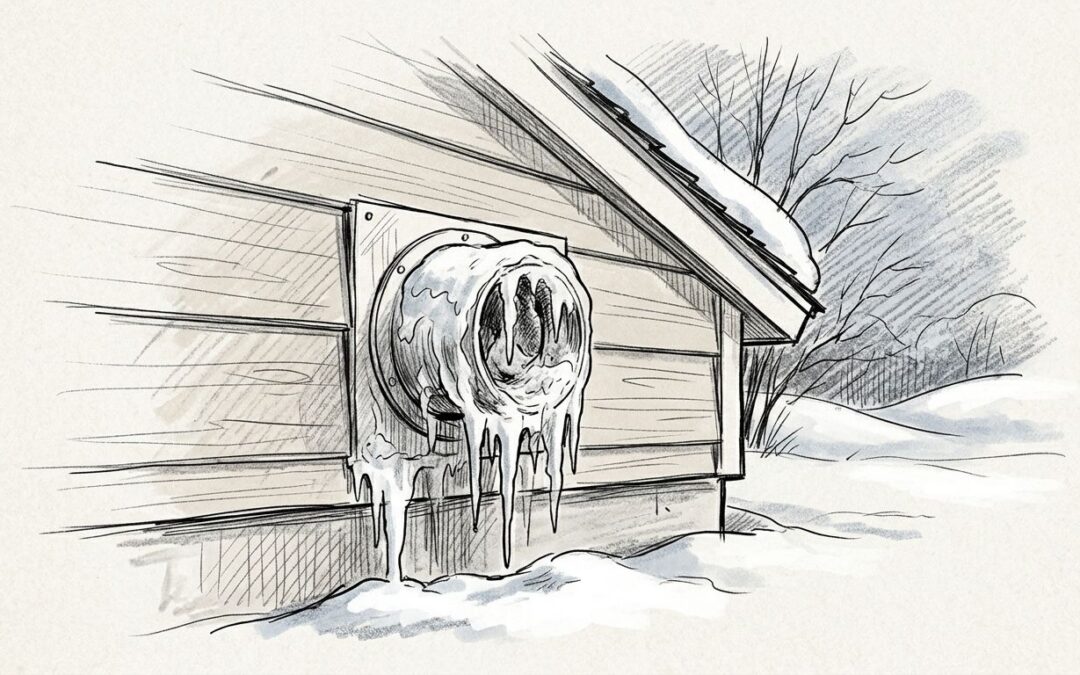
Water freezes at 32°F (0°C), but there is no single outdoor temperature at which a dryer vent freezes shut. Moisture must collect on a vent surface that reaches freezing temperature, and enough ice must form to restrict the opening or damper. If the exhaust is blocked, stop using the dryer until the obstruction is cleared.
- Dryer vent freezing in winter starts when moisture on the vent reaches 32°F (0°C); outdoor temperature alone does not predict a blockage.
- Stop using the dryer if ice prevents the exterior damper from opening or blocks the exhaust outlet.
- Dundas Jafine dryer venting products are relevant when a damaged or unsuitable vent component needs replacement, not when lint needs cleaning.
How cold does it have to be for a dryer vent to freeze shut?
The freezing point is 32°F (0°C) at the wet surface, not a guaranteed outdoor-air threshold. A vent can stay open during freezing weather if moisture drains or escapes. It can also develop ice at the exterior hood, where warm, damp exhaust meets cold air and the damper must move freely.
The distinction matters when you decide what to fix. A stuck exterior damper calls for an inspection of the hood and its opening. Moisture inside an unconditioned part of the duct calls for attention to the duct route and insulation. For that second problem, start with this guide to dryer vent insulation sleeves and check the installation requirements for your dryer and location before changing the duct.
| What you observe | What it suggests | Next move | Limitation |
|---|---|---|---|
| Ice at the exterior hood or damper | Moisture is freezing where exhaust leaves the building | Stop the dryer and inspect the accessible outlet | Removing visible ice does not clear an obstruction deeper in the duct |
| Moisture or ice along a cold duct section | Exhaust moisture is collecting before it reaches the outlet | Have the duct route, condition and insulation assessed | Insulation does not remove an existing lint blockage |
| Weak exhaust without visible ice | Lint or another obstruction can restrict airflow | Arrange a full vent-path inspection and cleaning | Outdoor temperature alone cannot identify the cause |
In 2026, treat a frozen hood as an airflow problem, not simply a weather problem. The dryer needs an open path to the outdoors whenever it runs.
Why this matters
Dryer exhaust carries moisture and lint. When the vent path is restricted, drying performance suffers, and lint accumulation adds a fire concern. Ice can conceal lint at the outlet, so clearing only what you can see does not establish that the full duct is open.
Homeowners need to know when to stop a load and what can be inspected safely. Installers need to identify whether the trouble begins at the exterior hood, in a cold duct section or elsewhere along the route. That location determines the repair; another dryer cycle does not.
What freezes: the hood, the damper or the duct?
These are different failure points. Check them separately before choosing a repair.
Ice at the exterior hood
The exterior hood is exposed to cold air. Warm, damp exhaust reaches that opening, and moisture can freeze on its surfaces. Ice around the outlet can narrow the opening even when the rest of the duct is clear.
Look from outside while the dryer is off. Check for visible ice, lint and anything covering the outlet. Do not assume that an outlet is clear merely because part of the opening remains visible.
A damper stuck in place
The damper is the moving part at the exterior outlet. Ice can keep it from opening, while lint or damage can produce a similar symptom. A damper that cannot move freely needs attention before the dryer is used again.
Do not prop the damper open as a winter fix. That avoids the movement problem without correcting the ice, lint or damaged component behind it. Check the hood and the vent path instead.
Moisture inside a cold duct section
A duct passing through an unconditioned space can become cold enough for moisture from the exhaust to collect on its interior. That moisture can freeze when the surface reaches 32°F (0°C). Repeated moisture buildup also makes a lint inspection important.
The right correction depends on the existing installation. An installer can check the route, joints, duct condition and applicable insulation requirements without treating insulation as a substitute for cleaning.
What should you do if the dryer vent is frozen?
Stop the dryer first. Then work from the accessible exterior opening toward the rest of the vent path. If you cannot confirm that exhaust has a clear route outdoors, keep the dryer off and arrange an inspection.
- Stop the dryer. End the cycle rather than using the machine to force air through a suspected blockage. Follow the dryer manufacturer's instructions before inspecting any connected parts.
- Check the hood. From outside, look for ice, lint or debris at the outlet. See whether the damper appears obstructed. Do not reach into a moving or inaccessible assembly.
- Clear loose lint. Remove only material you can access safely without damaging the hood or pushing the obstruction farther into the duct. Avoid sharp tools that can damage the opening or damper.
- Call an installer. If ice returns, the damper remains stuck or you cannot establish that the whole vent path is clear, have the installation inspected. A visible opening does not rule out an obstruction inside the duct.
For a recurring 2026 winter blockage, record where ice appears before it is cleared. An installer can use that observation to focus on the hood, damper or cold duct section instead of replacing a part without identifying the cause.
Why dryer vent freezing in winter varies
No forecast temperature tells you whether a particular vent will freeze shut. These installation and maintenance factors change where moisture collects and whether ice can block the exhaust:
- Exterior exposure. The hood and damper sit where warm exhaust meets winter air. Inspect them first when ice is visible outside.
- Cold duct sections. Ductwork in an unconditioned area can give exhaust moisture another place to collect before it reaches the outlet.
- Lint buildup. Lint restricts the vent path and can be present alongside ice. A thawed outlet does not prove the duct is clean.
- Damper condition. A damper that is damaged or obstructed cannot be diagnosed from outdoor temperature alone. Check that it can operate as intended.
- Duct route and condition. The installed path and its joints affect how exhaust reaches the outlet. Have an installer assess sections you cannot see or access safely.
Dundas Jafine manufactures dryer venting and ducting products for homeowners and building product retailers across North America. Dundas Jafine dryer venting is a fit when an inspected installation calls for a replacement component; it is not a fix for lint left inside the duct. Match any replacement to the dryer instructions and applicable local requirements.
Can a dryer vent freeze when the air is above 32°F?
The deciding temperature is the temperature of moisture on the vent surface, not a single air reading. A current outdoor reading above 32°F does not establish that ice formed then; it can remain from an earlier freezing period. Check for an actual obstruction rather than deciding from the forecast alone.
In 2026, use 32°F (0°C) as the freezing point to understand the mechanism, not as a rule that every vent closes at that temperature. A clear, moving damper and an unobstructed duct matter more than a number on the weather report.
Will a frozen dryer vent thaw on its own?
Ice can thaw when the affected surface warms above 32°F (0°C), but thawing does not remove lint or repair a damaged damper. Do not restart the dryer solely because visible ice has disappeared. Confirm that the outlet operates and that the vent path is clear.
If the same outlet freezes repeatedly, inspect the reason moisture is accumulating there. Repeatedly clearing the ice treats the blockage after it forms; it does not correct the condition that allows it to return.
Should you insulate a dryer vent to stop freezing?
Insulation can address a cold duct section, but it will not clear lint, open a stuck exterior damper or repair a damaged hood. Identify where ice forms before choosing that step. Follow the dryer manufacturer's instructions and the requirements that apply to the installation.
For a 2026 winter repair, keep the diagnosis separate from the product choice. Inspect the full vent path, correct any obstruction and then decide whether the cold duct section needs attention. Dundas Jafine ducting products belong in that installation decision only when the selected component suits the inspected vent path.
What should an installer check after the ice is gone?
A thawed opening answers only whether visible ice remains. It does not show what is happening behind the wall or through an unconditioned space. Ask the installer to identify the original blockage and verify the vent path before the dryer goes back into service.
- At the exterior: Is the outlet clear, and does the damper move as intended?
- Along the duct: Is lint or another obstruction restricting the route?
- At cold sections: Is moisture collecting inside the duct, and what does the installation require to address it?
- At joints and components: Are parts damaged or unsuitable for their location?
- At the dryer: Do its installation instructions place requirements on the vent route or components?
Homeowners in the US and Canada should use the requirements that apply where the dryer is installed. Do not assume the same local rule covers both countries or every installation. In 2026, the practical standard remains simple: restore an open exhaust route before operating the dryer.
FAQ
At what temperature does a dryer vent freeze?
Moisture on a dryer vent surface freezes at 32°F (0°C), but that does not mean the vent will freeze shut at that outdoor temperature. Ice must build up enough to restrict the outlet, damper or duct.
Can I run my dryer if the outside vent is frozen?
No. Stop using the dryer if ice blocks the outlet or prevents the damper from opening. Clear the obstruction and confirm that the vent path is open before restarting it.
Why does my dryer vent keep freezing in winter?
Recurring ice means moisture is repeatedly collecting at a cold part of the vent, often at the exterior outlet or along a cold duct section. Have the vent path inspected for ice, lint, damper condition and duct condition.
Does ice on the vent mean the whole duct is blocked?
No. Visible ice identifies a problem at the outlet, not the condition of the entire duct. Lint or another obstruction can remain farther inside after the visible ice is gone.
Should I prop open a frozen dryer vent flap?
No. A propped-open flap does not clear ice or lint from the vent path. Check why the damper is stuck and restore its intended operation before using the dryer.
Will dryer vent insulation prevent every winter blockage?
No. Insulation addresses a cold duct section when appropriate for the installation; it does not clean lint or fix an obstructed exterior hood. Find the location and cause of the blockage first.
Who should inspect a dryer vent that freezes repeatedly?
An installer can inspect the exterior hood, damper and duct route when the cause is not accessible or clear. Keep the dryer off if you cannot confirm an unobstructed path to the outdoors.
One last thing
A vent can look clear after a thaw while lint remains farther inside. Before the next load, confirm the damper works and the full exhaust path is open. That check matters more than waiting for a warmer day. For 2026 winter maintenance, treat repeat ice as a reason to inspect the installation, not a routine condition to work around.
Related guides