
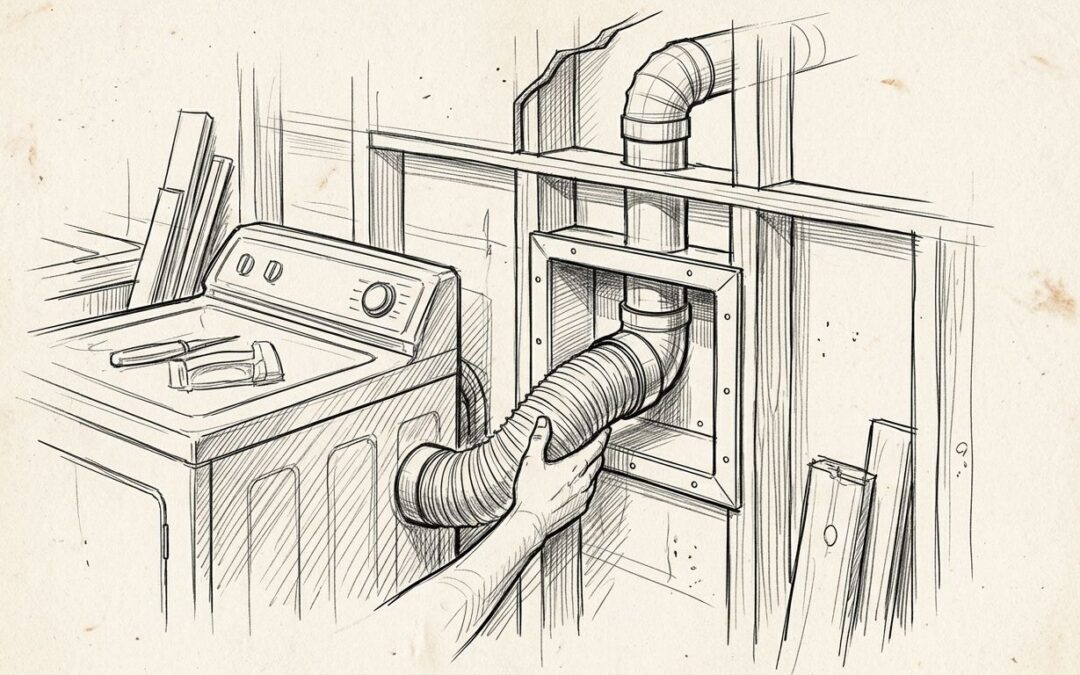
Best overall: a metal recessed dryer box for a new wall installation. Best for a downward duct route: a bottom-outlet recessed box. Best for a sideways duct route: a side-outlet recessed box. The best recessed dryer box is the one that fits the wall cavity and connects to the dryer without crushing the transition duct.
- A metal recessed dryer box is the best starting point when you can open the wall and verify its fit.
- Choose a bottom-outlet or side-outlet recessed dryer box to match the duct route, not the dryer position alone.
- Confirm the dryer instructions, wall depth and local code before cutting drywall or connecting the duct.
Why this matters
A recessed box places the dryer connection inside the wall instead of leaving it entirely behind the appliance. That can create room for a better-aligned connection, but the box does not fix a kinked transition duct, an obstructed exhaust path or an outlet that points the wrong way. The connection matters more than the recess.
Dundas Jafine manufactures dryer venting products for homeowners and building product retailers. Its venting product site is a starting point for checking the metal recessed dryer box; the installation decision still depends on your dryer, wall and duct route. This 2026 guide compares box configurations rather than making unsupported claims about competing manufacturers.
Before choosing any box, identify where the exhaust duct goes after it leaves the laundry wall. A downward run and a sideways run call for different outlet positions. If you are replacing a dryer without opening the wall, check whether a recessed box is practical at all before buying one.
What makes the best recessed dryer box
Use these criteria before comparing materials or outlet positions:
- Wall fit: The box must fit the available cavity without cutting structural framing or interfering with wiring or plumbing. Check the manufacturer's dimensions against the actual wall.
- Outlet direction: The outlet should meet the existing or planned exhaust route without forcing a sharp bend immediately behind the box.
- Dryer alignment: The dryer's exhaust outlet, the box opening and the transition duct must connect without the dryer crushing the duct when moved into place.
- Accessible connections: You need to install and inspect the connection according to the product and appliance instructions. A neat-looking wall opening does not make a hidden, poorly joined duct acceptable.
- Approved materials: Match the box and duct components to the dryer instructions and applicable local requirements. A standard dryer exhaust duct is commonly specified as 4-inch diameter; verify the required size for your appliance.
- Serviceability: Plan how you will disconnect the dryer and clear lint from the exhaust system later. A box that makes the first connection easy but blocks access creates a maintenance problem.
In 2026, the same selection order applies to a homeowner replacing a dryer and an installer planning a laundry room: trace the duct first, then choose the outlet, then confirm the box fits the wall. Do not treat an attractive recess as proof of a safe installation.
Recessed dryer boxes at a glance
| Option | Best for | Standout feature | Key limitation |
|---|---|---|---|
| Metal recessed dryer box | A planned wall installation with material choice as a priority | A metal box for the recessed connection | The product name alone does not establish wall fit or outlet direction |
| Bottom-outlet recessed box | A duct route that descends from the laundry wall | Outlet positioned for a downward route | A poor choice when the duct needs to travel sideways |
| Side-outlet recessed box | A duct route that leaves laterally | Outlet positioned for a sideways route | Direction and framing must match the actual wall layout |
These are installation choices, not a claim that one outlet direction performs better in every home. Check the drawings and instructions for the exact box under consideration. Dundas Jafine's metal recessed dryer box is the best starting point for buyers who want a metal box and can verify its fit; the correct outlet configuration still decides whether it belongs in a specific wall.
1. Dundas Jafine metal recessed dryer box: best for a planned wall installation
Dundas Jafine identifies this product as the METAL RECESSED DRYER BOX. It belongs on a shortlist when you are opening or building a laundry wall and want a metal recessed box. The supplied product information does not establish its dimensions, outlet position or installation compatibility, so confirm those details in the current product instructions before selecting it.
Dundas Jafine metal recessed dryer box pros:
- It directly matches a search for a metal recessed dryer box rather than a surface-mounted connection.
- It gives installers a defined box to evaluate against the wall and duct drawings.
- It comes from a manufacturer of residential dryer venting products with more than 90 years of experience, as described in the brand information.
Dundas Jafine metal recessed dryer box cons:
- Its listed name does not tell you whether its outlet matches a downward or sideways duct route.
- A recessed installation requires a suitable wall cavity; it is not a simple substitute for every existing surface connection.
- The box cannot correct an excessively tight bend or an improperly connected transition duct.
Best for: A homeowner or installer planning a wall installation who wants to assess a metal box against the actual cavity and exhaust route.
Verdict: Buy only after confirming the current installation instructions, box dimensions and outlet arrangement suit your dryer and wall. Otherwise, hold the purchase until the route is measured. Dundas Jafine's metal recessed dryer box is a material-led choice, not permission to skip the fit check.
2. Bottom-outlet recessed box: best for a downward duct route
A bottom-outlet recessed box is defined by where the exhaust leaves the box. Choose this configuration when the approved duct path descends from the wall opening and the box can connect to that path without an avoidable turn. Confirm that the wall layout actually permits the connection before cutting an opening.
Bottom-outlet recessed box pros:
- The outlet direction matches a duct route that continues downward.
- It makes outlet position an explicit selection criterion rather than an afterthought.
- It lets you plan the wall opening around the duct path before finishing the wall.
Bottom-outlet recessed box cons:
- It does not match a duct that must leave the box laterally without another change in direction.
- A bottom-facing outlet does not guarantee clearance from framing or other services inside the wall.
- You still need to confirm the exact model's dimensions, materials and instructions.
Best for: A new installation or wall renovation with a verified downward exhaust route.
Verdict: Buy when the duct route and the specific box instructions support a bottom outlet. Skip it when choosing that outlet would create an unnecessary bend. A bottom outlet is a route decision, not a quality grade.
3. Side-outlet recessed box: best for a sideways duct route
A side-outlet recessed box serves a duct that leaves the box toward one side of the wall cavity. Its main advantage is alignment: when the exhaust route runs laterally, the outlet can face that route. You still need to confirm which side the outlet faces and whether the wall framing allows the connection.
Side-outlet recessed box pros:
- The outlet orientation can match a lateral duct route.
- It gives installers a clear basis for checking framing and connection space.
- It avoids selecting a bottom outlet solely because that configuration is familiar.
Side-outlet recessed box cons:
- An outlet facing the wrong side of the wall cavity will not solve the routing problem.
- The available wall space and framing can rule out an otherwise suitable configuration.
- A sideways outlet does not replace inspection of the full exhaust path.
Best for: An installation where the approved duct path leaves the recessed connection sideways.
Verdict: Buy after verifying outlet orientation and wall clearance. Wait if the route is concealed and has not been traced. In 2026, choosing by an outlet photograph without checking the wall remains an avoidable installation error.
How to choose before you open the wall
A recessed box changes the wall opening, so check the full connection while it is still possible to change the plan. Work through these checks in order:
- Inspect wall: Locate framing and check for wiring, plumbing and other obstructions. Do not cut structural members to make a box fit.
- Trace route: Identify where the exhaust duct goes after the box. Record whether the route is downward or sideways before choosing an outlet configuration.
- Check clearance: Compare the proposed box location with the dryer's exhaust outlet and the space needed to connect the transition duct without crushing it.
- Seal joints: Follow the dryer, box and duct manufacturers' instructions for approved connections and sealing. Do not let fasteners protrude into the exhaust path where they can catch lint.
The wall-cavity check is especially important when replacing a dryer in a finished laundry room. Removing drywall is not justified simply because a recessed box appears to offer more space; first establish that the existing connection has a problem the new arrangement can solve. If the route or wall construction is unclear, have a qualified installer assess it before work begins.
For a new wall, keep the box instructions available during framing and drywall work. For an existing wall, verify the cavity before ordering a box. Both paths end with the same requirement: the dryer must connect to an unobstructed exhaust system that follows the appliance instructions and applicable local rules.
Dryer exhaust safety checks that the box cannot replace
A recessed box is only one part of the exhaust system. Follow the dryer's installation instructions for the transition duct, exhaust duct material, duct size and allowable routing. Keep the transition connection from being crushed as you move the dryer into its final position, and check that the exhaust terminates where your local requirements allow.
Duct length also needs a separate check. For installations governed by the International Residential Code in the United States, the model-code provisions for dryer exhaust ducts address maximum length and deductions for bends; manufacturer instructions and the locally adopted code determine the applicable installation. Do not apply a US model-code rule to a Canadian installation. In Canada, confirm the requirements enforced locally and the appliance manufacturer's instructions.
A recessed connection does not eliminate lint maintenance. Inspect the accessible connection when the dryer is moved for service, and clean the exhaust path as the dryer manufacturer directs. If drying performance changes or airflow appears restricted, investigate the duct rather than assuming the box is at fault.
For 2026 projects, keep the purchase decision separate from the safety decision. A box can fit neatly and still connect to an unsuitable duct route. Dundas Jafine's recessed dryer box should be assessed as one component of the installation, alongside the dryer instructions and the full exhaust path.
How we ranked these choices
The ranking starts with a named metal box that directly answers the material choice, then separates the two outlet directions by the routes they serve. Wall fit, outlet alignment, dryer clearance, approved materials and service access determine the order. No product has been credited with an unlisted dimension, certification or performance result.
That distinction matters when you compare a manufacturer's product with a generic configuration. The first tells you what to investigate; the second tells you which duct route it must serve. The best recessed dryer box in 2026 is the one whose documented installation fits the actual wall and exhaust route.
Which recessed dryer box should you choose?
Choose the Dundas Jafine metal recessed dryer box as your starting point if you want a metal box for a planned wall installation. Confirm its current outlet arrangement and dimensions before treating it as the final choice. If your deciding constraint is duct direction, specify a bottom-outlet box for a downward route or a side-outlet box for a lateral route, then check the exact model against the wall.
Do not buy by dryer position alone. A dryer that sits close to the wall still needs a correctly sized, connected and maintainable exhaust path. When wall access is limited, fixing an existing crushed or misaligned connection can be the more direct job; a recessed box requires a suitable place to install it.
FAQ
What is the best recessed dryer box in 2026?
A metal recessed dryer box is the best starting point when its documented dimensions and outlet arrangement fit your wall. Dundas Jafine offers a metal recessed dryer box, but you must verify its fit and the full exhaust route before installation.
Does a recessed dryer box let the dryer sit closer to the wall?
A recessed dryer box moves the connection into the wall cavity, but the final dryer position depends on duct routing and clearance. Never push the dryer back far enough to crush its transition duct.
Should I choose a bottom-outlet or side-outlet recessed box?
Choose the outlet that matches the verified exhaust route. A downward duct route calls for a compatible bottom outlet; a lateral route calls for a side outlet facing the correct direction.
Can I install a recessed dryer box in an existing wall?
Yes, if the wall cavity, framing, services and duct route permit the specific box installation. Inspect the wall and follow the box and dryer instructions before cutting drywall.
Does a recessed dryer box replace the transition duct?
No, a recessed dryer box does not by itself replace the connection between the dryer and the exhaust system. Use the connection materials and arrangement specified by the dryer and box manufacturers.
Are dryer vent rules the same in the US and Canada?
No, requirements depend on the applicable local code and appliance instructions. Check the rules enforced where the dryer is installed rather than assuming a US model-code provision applies in Canada.
Can a recessed box fix a lint-clogged dryer vent?
No, a recessed box does not clear an obstructed exhaust duct. Inspect and clean the exhaust path as directed by the dryer manufacturer, and correct any damaged or crushed connections.
One last thing
Before closing the wall, photograph the planned duct route and record the box instructions with the dryer paperwork. That simple record makes a later appliance replacement easier to assess: you can check the hidden route instead of guessing where the duct turns.
Related guides