
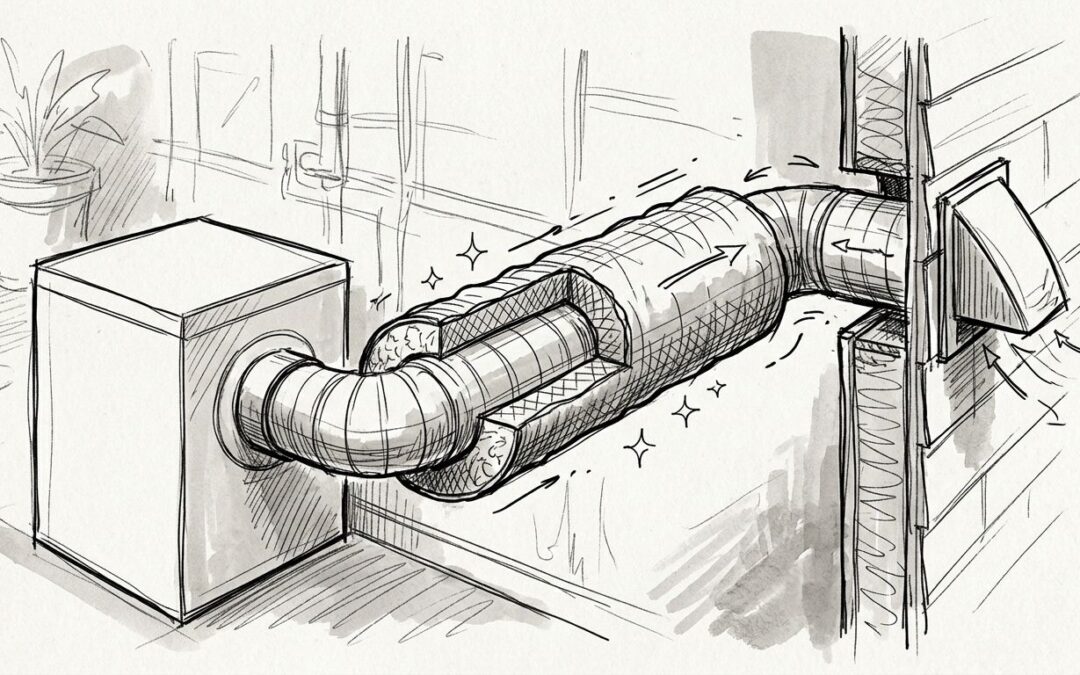
Best overall: foil-faced fiberglass duct wrap. Best for tight attic joist bays: reflective bubble insulation wrap. Best budget-friendly option: closed-cell foam pipe insulation sleeves. Any dryer duct routed through an unconditioned attic, crawlspace, or exterior wall in 2026 needs one of these five insulation types to stop condensation and cut heat loss on the run.
- Foil-faced fiberglass duct wrap is the best dryer vent insulation for exposed attic and exterior runs in 2026.
- Reflective bubble insulation wrap fits tight joist bays where fiberglass wrap won’t wrap cleanly.
- Closed-cell foam pipe sleeves install fastest for short, straight DIY jobs.
- Rigid pre-insulated duct sections handle long basement-to-roof runs without field-wrapped seams.
- Pair any sleeve with rigid or semi-rigid duct, never flexible foil duct, for a code-compliant dryer vent run.
Why this matters
An uninsulated dryer duct running through a cold attic acts like a condenser. Warm, moist exhaust air hits the cold duct wall, water beads up inside, and that moisture drips back toward the dryer or soaks into lint clinging to the duct interior. Wet lint dries slower, restricts airflow, and adds load to the dryer motor.
Dundas Jafine has manufactured dryer venting and air distribution products for over 90 years, and the company's engineering guidance on venting has always come back to the same point: the duct material and the insulation around it matter as much as the vent hood on the wall. Insulation sleeves are the fix for the condensation and heat-loss problem, not a fire-prevention measure — more on that distinction below.
The five options below cover every common installation scenario in 2026: exposed attic runs, tight joist bays, straight basement runs, new construction, and retrofit patch jobs on existing duct.
What makes the best dryer vent insulation sleeve
- Thermal performance — foil-faced fiberglass wrap is commonly rated R-6 to R-8, enough to stop condensation in most unconditioned attics.
- Moisture/vapor barrier — a foil facing or closed-cell foam structure that keeps condensation from forming on the duct wall in the first place.
- Fire-resistant facing — non-combustible or fire-resistant material near any heat source, including the dryer connection point.
- Install ease — wraps or slides around standard 4-inch rigid or semi-rigid duct without gaps at seams or elbows.
- Durability — holds up to attic heat swings and crawlspace humidity for years without crumbling or losing adhesion.
- Duct compatibility — matches the rigid or semi-rigid duct diameter used on the run; flexible foil duct is not the right base material for a dryer vent regardless of insulation.
Dryer vent insulation sleeves at a glance
| Sleeve type | Best for | Standout feature | Key limitation |
|---|---|---|---|
| Foil-faced fiberglass duct wrap | Exposed attic and exterior runs | R-6 to R-8 thermal rating with foil vapor barrier | Fiberglass fibers irritate skin during install |
| Reflective bubble insulation wrap | Tight attic joist bays | Low-profile foil layer fits cramped spaces | Lower R-value per inch than fiberglass wrap |
| Closed-cell foam pipe insulation sleeve | Short straight runs, DIY installs | Slides on in minutes, no wrapping | Won't bend cleanly around elbows |
| Rigid pre-insulated duct sections | Long basement-to-roof runs | Factory-applied insulation and seam | Fixed lengths mean cutting waste |
| Self-adhesive foil tape and wrap combo | Retrofit patch jobs | No duct removal needed | Thinner layer, best as a patch only |
1. Foil-faced fiberglass duct wrap: best dryer vent insulation for exposed attic runs
A reflective foil facing over fiberglass batt wraps around rigid or semi-rigid duct and seams close with foil tape. It's the standard duct-wrap product sold at most building product retailers, commonly rated R-6 to R-8.
Foil-faced fiberglass wrap pros:
- High R-value per inch relative to the other four options
- Foil facing reflects radiant heat and doubles as the vapor barrier
- Wraps around elbows and transitions when cut and taped correctly
- Widely stocked, easy to source in most markets
Foil-faced fiberglass wrap cons:
- Fiberglass fibers irritate skin and lungs during install; gloves and a mask are worth the five minutes
- Foil seams need continuous tape to hold the vapor barrier over multiple seasons
- Bulkier profile than foam sleeves, which matters in cramped joist bays
Best for: homeowners and installers insulating an exposed rigid or semi-rigid duct run in an attic or along an exterior wall. Verdict: Buy.
2. Reflective bubble insulation wrap: best for tight attic joist bays
Two layers of reflective foil sandwich a thin bubble core, wrapping the duct with a low profile where fiberglass batt won't fit between joists.
Reflective bubble wrap pros:
- Thin enough to fit tight joist bays and crawlspace clearances
- Lightweight, cuts and wraps by hand without special tools
- Foil layer resists moisture better than uncoated foam sleeves
Reflective bubble wrap cons:
- Lower R-value per inch than fiberglass duct wrap
- Less effective in colder climates unless doubled up
- Needs foil tape at every seam to keep the vapor barrier intact
Best for: attic runs where the duct sits in a shallow joist bay and full-thickness fiberglass wrap physically won't fit. Verdict: Buy for space-constrained runs; Hold for long cold-climate runs.
3. Closed-cell foam pipe insulation sleeve: best for straight DIY runs
A pre-slit foam tube slides directly over a straight section of rigid or semi-rigid duct and seals along the slit with tape or adhesive.
Closed-cell foam sleeve pros:
- Fastest install of the five options; no wrapping or shaping
- Closed-cell structure resists moisture absorption
- Comfortable to handle, no fiberglass irritation
Closed-cell foam sleeve cons:
- Pre-formed tubes don't bend cleanly around elbows or transitions
- Generally lower fire resistance than fiberglass-based wrap products
- Shorter lengths per piece mean more seams on a long run
Best for: a short, straight duct section a homeowner wants insulated in an afternoon. Verdict: Buy for short straight runs; Skip for runs with multiple elbows.
4. Rigid pre-insulated duct sections: best for long basement-to-roof runs
Rigid metal duct sold with factory-applied insulation and a vapor barrier already in place, joining section to section with connectors instead of field-wrapped insulation.
Pre-insulated duct pros:
- No field-wrapping labor on long vertical runs
- Factory seam is more consistent than hand-taped wrap
- Holds shape without sagging over years of temperature swings
Pre-insulated duct cons:
- Heavier and more involved to source per linear foot than wrap-it-yourself options
- Fixed section lengths mean cutting to fit adds waste
- Not stocked at every retailer; some markets require special order
Best for: new construction or a full duct replacement running from a basement dryer up through multiple floors. Verdict: Buy for new construction and full replacement; Hold for a small retrofit patch.
5. Self-adhesive foil tape and wrap combo: best for retrofit patch jobs
Peel-and-stick foil tape paired with a thin insulation wrap, applied directly over existing duct where insulation is damaged or missing.
Foil tape and wrap combo pros:
- No need to remove existing duct to add insulation
- Foil tape doubles as an air seal at joints while adding a thin thermal layer
- Conforms to odd transitions and fittings that pre-formed sleeves won't fit
Foil tape and wrap combo cons:
- Thinner insulation layer than a dedicated wrap product
- Adhesive can lose grip after repeated attic heat cycles
- Works best as a patch, not a full-run solution
Best for: patching a short damaged section of existing insulated duct without a full teardown. Verdict: Hold — use as a retrofit patch, not a full new run.
How we ranked these
Foil-faced fiberglass wrap ranks first on thermal performance and vapor barrier strength, the two criteria that matter most for stopping condensation. Reflective bubble wrap and closed-cell foam trade some R-value for fit and install speed. Rigid pre-insulated sections win on durability for long, permanent runs, and the foil tape combo is ranked last because it's built for patching, not for a full new installation. For the duct itself, indoor dryer vent kits and rigid duct options determine which insulation sleeve will even fit the run.
Which dryer vent insulation sleeve should you choose?
Default to foil-faced fiberglass duct wrap for most attic and exterior runs in 2026 — it has the best combination of R-value and vapor barrier of the five options. Switch to reflective bubble wrap only when the duct sits in a joist bay too shallow for fiberglass. Reach for closed-cell foam sleeves on short, straight sections when speed matters more than R-value, rigid pre-insulated sections for new construction, and the foil tape combo strictly as a patch on existing damaged insulation.
Whichever sleeve you pick, confirm the duct underneath is rigid or semi-rigid metal — insulation added to flexible foil duct doesn't fix the airflow restriction that flexible duct creates. Reviewing dryer vent kit options before buying insulation avoids wrapping a duct that needs to be replaced anyway.
Browse dryer venting products
See rigid duct, vent kits, and hoods before you insulate the run.
FAQ
What is the best dryer vent insulation sleeve in 2026?
Foil-faced fiberglass duct wrap is the best overall choice for most attic and exterior dryer duct runs in 2026. It’s rated R-6 to R-8 and includes a built-in foil vapor barrier, which handles condensation better than foam or bubble wrap on longer exposed runs.
Do dryer vents need to be insulated?
Yes, when the duct runs through an unconditioned attic, crawlspace, or exterior wall. Without insulation, warm exhaust air condenses on the cold duct wall, and that moisture soaks into lint and drips back toward the dryer.
What R-value should dryer vent insulation have?
Foil-faced fiberglass duct wrap commonly comes rated R-6 to R-8, which is sufficient for most residential attics. Colder climates or longer exposed runs benefit from staying at the higher end of that range.
Can you use regular pipe insulation on a dryer vent?
Closed-cell foam pipe insulation sleeves work fine on short, straight rigid or semi-rigid duct sections. They don’t bend cleanly around elbows, so a run with multiple turns needs wrap-style insulation instead.
Is flexible foil duct allowed for dryer venting?
Most current residential codes call for rigid or semi-rigid metal duct on dryer vents rather than flexible foil or vinyl duct, which restricts airflow and traps lint. Check your local code before finalizing the duct material, since requirements vary by jurisdiction.
How much does dryer vent insulation cost?
Cost depends on the material, the length of duct being wrapped, and the retailer. Check current pricing at a building product retailer for the specific sleeve type and duct length you need.
Does insulating a dryer duct reduce fire risk?
No. Insulation addresses condensation and heat loss, not fire risk. The U.S. Fire Administration lists lint buildup, not duct insulation, as the leading cause of home dryer fires, so annual duct cleaning still matters regardless of insulation.
Can you insulate a dryer vent yourself?
Yes. Foam pipe sleeves and bubble wrap insulation are both DIY-friendly and install with basic tools in under an hour on a straight run. Fiberglass wrap takes longer and needs gloves and careful taping at every seam.
One last thing
Insulating a dryer duct stops condensation and cuts heat loss — it does not lower fire risk. Lint buildup is the leading cause of home dryer fires according to the U.S. Fire Administration, which means an insulated duct still needs the same cleaning schedule as an uninsulated one. Wrap the duct for efficiency in 2026, and keep cleaning it for safety regardless of which sleeve you choose.
Related guides