
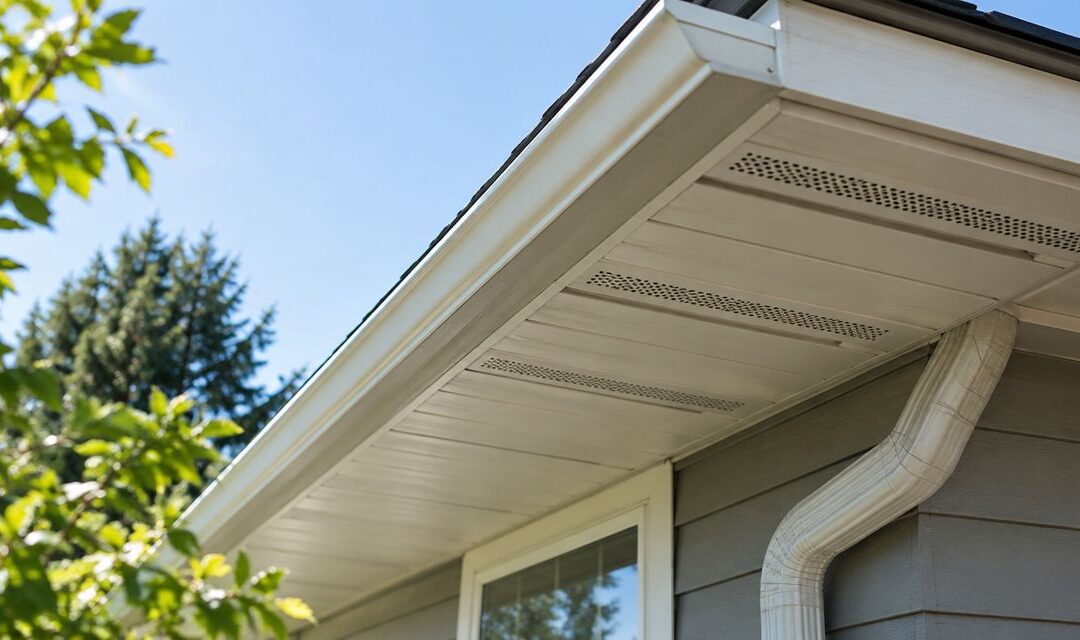
Picking the right soffit vent decides whether your attic actually breathes or just looks vented. This ranking sorts the five main soffit vent types by the exact problem each one solves in 2026, not by which one photographs best on a shelf.
- Continuous soffit vents win overall for steady airflow across an entire roofline in 2026.
- Dundas Jafine soffit vent caps are the strongest soffit vent for retrofitting existing siding without removing full panels.
- Pre-vented soffit panels suit new construction, where ventilation and finish install in one pass.
- Most building codes size attic ventilation at a 1:150 net free area ratio, or 1:300 with a vapor barrier.
- Insect-screen soffit vents matter most on wooded or rural lots where pest entry through the soffit is the real risk.
Why this matters
Attic ventilation isn't cosmetic. Without enough intake air moving through the soffit, warm moist air stalls under the roof deck, condenses on the sheathing, and accelerates rot, mould, and shingle failure. That shows up as ice damming in cold Canadian winters and heat-soaked shingles in hot US summers.
Soffit vents are the intake half of the system; ridge or roof vents are the exhaust half. Get the intake wrong and the exhaust vents can't pull enough air, no matter how good they are.
Dundas Jafine has built air distribution and venting products for over 90 years, and every soffit vent on this list is judged by net free area, install difficulty, and outdoor durability, not by marketing copy. If your project also touches the laundry room, the top dryer vent kits guide covers duct sizing the same way.
What makes the best soffit vent
- Net free area (NFA) — the actual open airway per vent, measured in square inches; this determines how much intake air reaches the attic.
- Retrofit vs. new-construction fit — round caps drop into an existing hole; strip and panel vents assume fresh soffit material is going up.
- Insect and rodent exclusion — mesh screening keeps out bees, wasps, and rodents without materially cutting airflow.
- Material compatibility — aluminum, vinyl, and wood soffit each call for different vent profiles and fasteners.
- Weather resistance — UV-stable plastics and corrosion-resistant aluminum hold shape and colour over decades outdoors.
- Code compliance — the vent has to contribute enough NFA to hit the 1:150 or 1:300 attic ventilation ratio your jurisdiction requires.
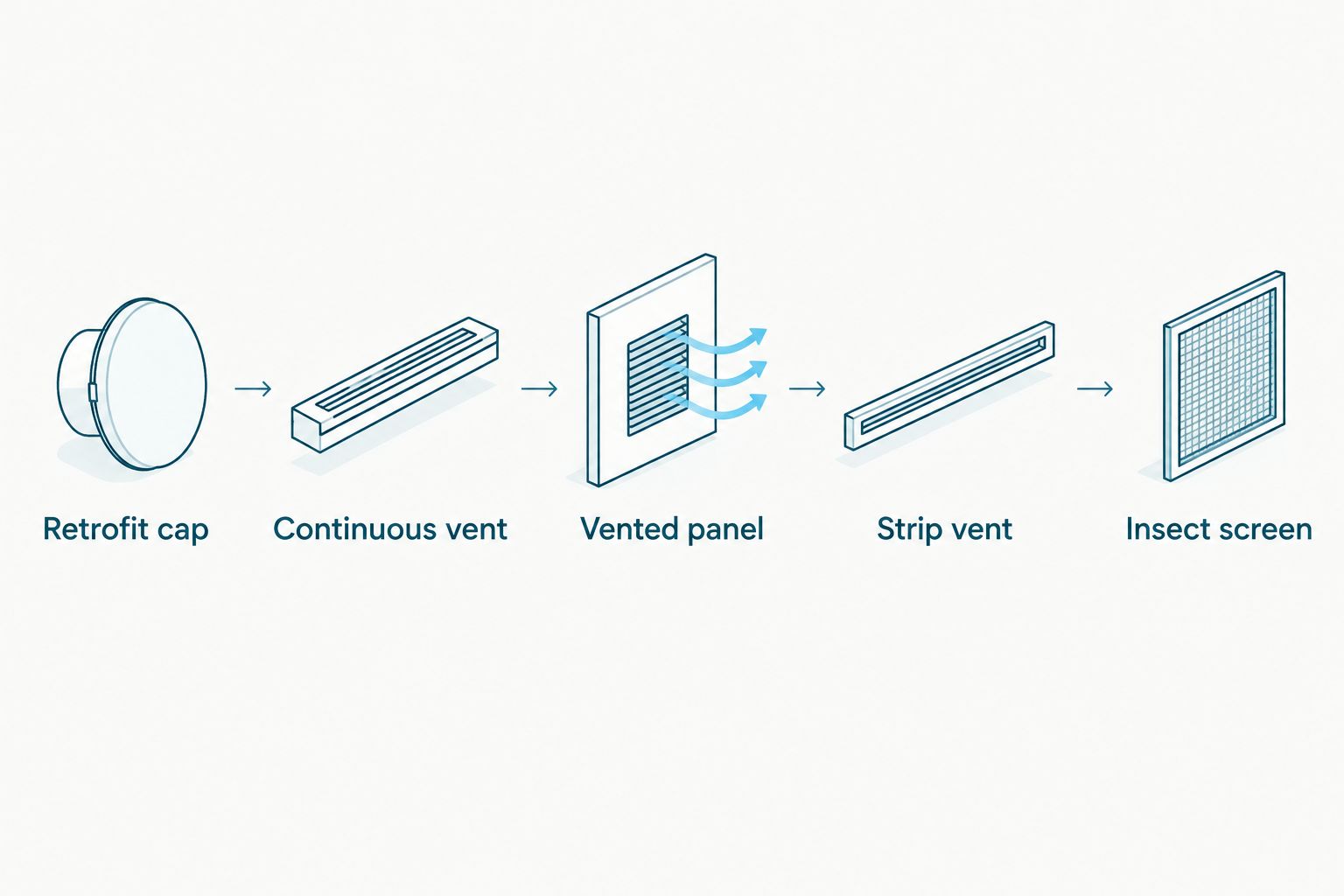
Soffit vent types at a glance
| Type | Best for | Standout feature | Key limitation |
|---|---|---|---|
| Dundas Jafine soffit vent caps | Retrofit installs on existing siding | Drops into one round cutout, no full panel removal | Needs several caps spaced correctly to match a continuous run's NFA |
| Continuous soffit vents | Whole-roofline airflow | Even intake along the entire eave, no gaps | A full-length strip cut is more invasive on finished soffit |
| Pre-vented soffit panels | New construction | Ventilation and finish material install as one product | Not practical to add once solid soffit is already up |
| Rectangular strip soffit vents | Narrow overhangs | Smaller footprint fits shallow or narrow soffit boards | Lower NFA per linear foot than a continuous vent |
| Insect-screen soffit vents | Wooded or rural properties | Integrated fine mesh blocks bees, wasps, and rodents | Fine mesh can reduce airflow slightly versus an open vent |
1. Dundas Jafine Soffit Vent Caps: best soffit vent for retrofit installs
Dundas Jafine manufactures round soffit vent caps built for the most common ventilation job on existing homes: adding intake air without tearing out soffit that's already installed and painted to match the house.
The cap fits into a single cutout and locks into the soffit material from below. That makes it the practical choice when a homeowner or contractor is retrofitting ventilation on a house built without enough intake air, which is common on homes over 20 years old.
Dundas Jafine soffit vent cap pros:
- Installs through one cutout, no soffit panel removal
- Works on aluminum, vinyl, and wood soffit
- Backed by a manufacturer with over 90 years in air distribution and venting products
- Sold through building product retailers across North America, so replacement stock is easy to find
Dundas Jafine soffit vent cap cons:
- Multiple caps are needed to match the NFA of a single continuous vent run
- Spacing has to be calculated correctly, or the attic still ends up under-ventilated
- Not the fastest option for a full re-soffit job on new construction
Best for: homeowners and contractors retrofitting attic ventilation into an existing house without replacing the soffit.
Verdict: Buy for retrofit jobs where the soffit panel stays in place.
2. Continuous Soffit Vents: best soffit vent for whole-roofline airflow
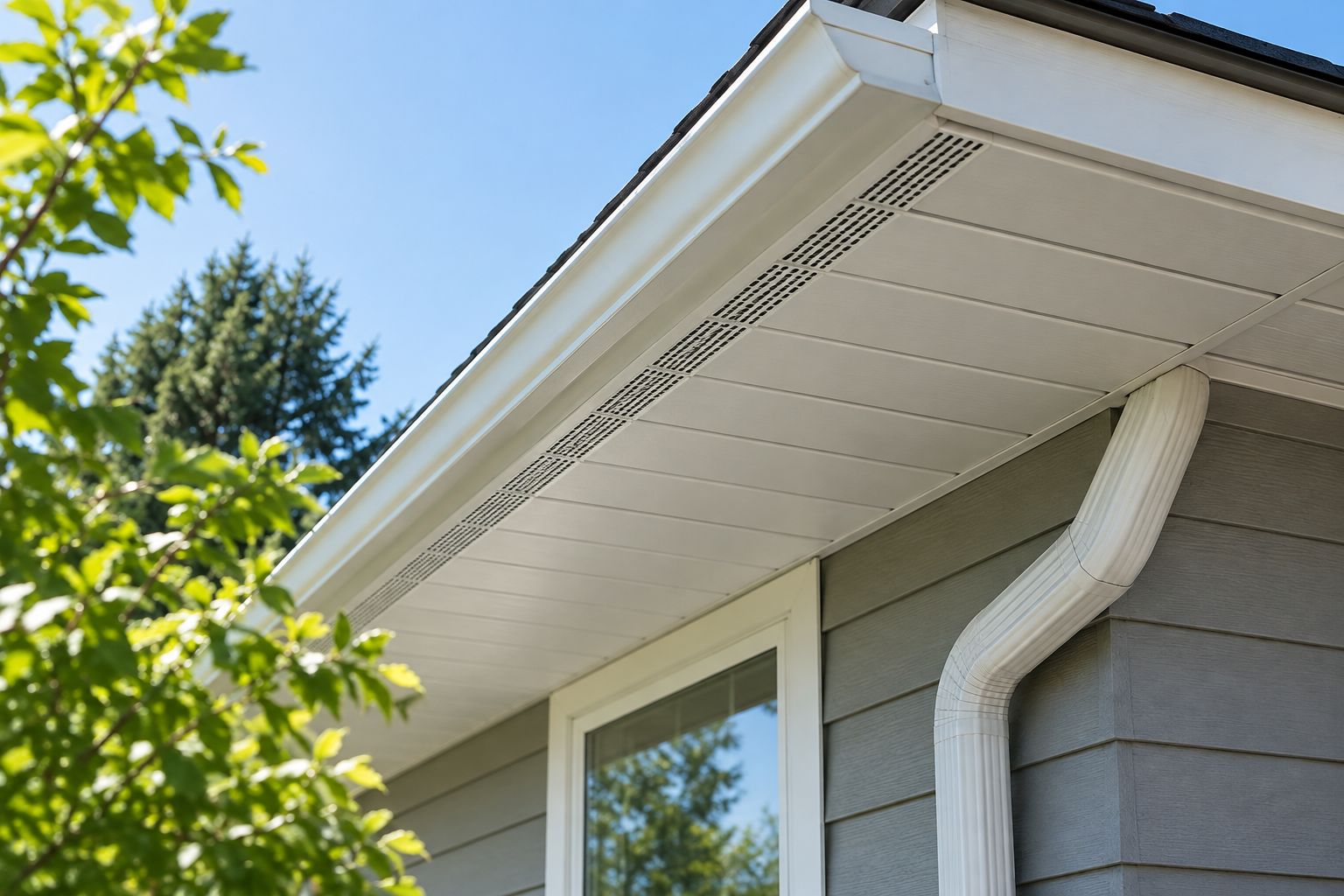
A continuous soffit vent runs the full length of the eave as one strip, so intake air enters evenly along the entire roofline instead of at scattered points.
That even distribution is what most ridge vent sizing assumes, which makes continuous strips the closest match to a 1:150 or 1:300 NFA calculation done by the book.
Continuous soffit vent pros:
- Even airflow along the whole eave, no dead zones
- Easiest type to match against a calculated NFA requirement
- Works well paired with ridge vents on new roofs
Continuous soffit vent cons:
- Cutting a full-length strip into finished soffit is more invasive than a round cap
- Harder to install cleanly on a house with dormers or interrupted eaves
Best for: new roofs or full soffit replacements where the whole eave is open for work.
Verdict: Buy when the soffit is already coming off for other work; Hold if you just need a quick retrofit fix.
3. Pre-Vented Soffit Panels: best soffit vent for new construction
Pre-vented soffit panels build the venting directly into the finish material, so the panel that covers the eave is the same panel that provides intake air.
Builders use these on new construction because they cut the install down to a single pass: one panel, one fastening step, ventilation included.
Pre-vented soffit panel pros:
- Ventilation and finish material are one product, one install step
- Consistent NFA across the whole panel run
- No secondary cutting or cap installation needed
Pre-vented soffit panel cons:
- Not a practical retrofit for a house that already has solid soffit up
- Panel style and colour options are tied to whatever the manufacturer stocks
Best for: new-construction builds and full soffit replacements planned before the panels go up.
Verdict: Buy on new builds; Skip for retrofit unless the soffit is already being replaced.
4. Rectangular Strip Soffit Vents: best soffit vent for narrow overhangs
Rectangular strip vents install in shorter runs than a full continuous vent, sized for soffit boards too narrow for a standard continuous profile.
They're common on older homes with shallow overhangs, where there isn't enough board width to run a full continuous vent without weakening the panel.
Rectangular strip vent pros:
- Fits narrow or shallow soffit boards a continuous vent won't
- Simple to size for short runs between rafter tails
- Works alongside other vent types on the same eave
Rectangular strip vent cons:
- Lower NFA per linear foot than a full continuous vent
- Needs more units spaced along the eave to hit code minimums
Best for: older homes with narrow overhangs that can't take a full continuous vent profile.
Verdict: Hold — a solid fit for narrow soffit, but check the NFA math before committing on a wide eave.
5. Insect-Screen Soffit Vents: best soffit vent for wooded or rural properties
Insect-screen soffit vents add fine mesh behind the vent opening, built to keep bees, wasps, hornets, and small rodents out of the attic while still passing intake air.
Properties near woods or open fields see more insect and rodent pressure at soffit openings than urban lots, which is where the extra screening earns its place.
Insect-screen soffit vent pros:
- Integrated mesh blocks common pests without a separate screen retrofit
- Works with round caps, continuous vents, or strip vents depending on the base product
- Reduces the chance of nesting materials blocking airflow over time
Insect-screen soffit vent cons:
- Fine mesh can reduce NFA slightly compared with an open vent of the same size
- Mesh needs periodic inspection for debris buildup
Best for: rural and wooded properties where insect and rodent entry through the soffit is the main risk.
Verdict: Buy for wooded or rural lots; Skip if the property is urban with low pest pressure.
Find the right soffit vent
Browse Dundas Jafine’s venting and air distribution product line.
How we ranked
Each soffit vent type is scored against the six criteria above: net free area, retrofit versus new-construction fit, insect and rodent exclusion, material compatibility, weather resistance, and code compliance against the 1:150 or 1:300 ventilation ratio.
No type wins on every criterion, and that's the point. A round retrofit cap and a continuous strip solve different problems, so the ranking sorts by job, not by a single overall score. Dundas Jafine's own soffit vent cap made this list because it genuinely fits the retrofit use case, not because Dundas Jafine manufactures it.
Which soffit vent should you choose in 2026?
If you're retrofitting ventilation into a house that already has finished soffit, Dundas Jafine soffit vent caps are the practical pick: no panel removal, no re-siding. If the soffit is already off the house for other work, run continuous soffit vents the full length of the eave and size the NFA against the 1:150 ratio. Builders on new construction should default to pre-vented soffit panels and skip the separate vent-install step entirely.
For narrow overhangs, drop to rectangular strip vents, and add insect-screen soffit vents wherever the property backs onto woods or open land. Whichever soffit vent you land on for 2026, confirm the total NFA across all your vents actually meets your local code minimum — a vent that looks right and under-delivers on NFA leaves the attic exactly as under-ventilated as no vent at all.
FAQ
What’s the best soffit vent for an older house?
Dundas Jafine soffit vent caps are usually the best soffit vent for an older house because they retrofit into a single cutout without removing the existing soffit panel. Continuous vents work too, but require a full-length cut that’s more invasive on finished siding.
Is a continuous soffit vent better than a round vent cap?
Neither is universally better; continuous soffit vents deliver more even airflow across a whole eave, while round vent caps retrofit into existing soffit without removing panels. Choose based on whether the soffit is already off the house.
How much net free area does a soffit vent need?
Most building codes require a 1:150 net free area ratio between total vent NFA and attic floor area, or 1:300 when a vapor barrier is installed. Calculate the attic square footage first, then divide by the ratio to get the required NFA in square inches.
Can you mix soffit vent types on the same house?
Yes, mixing types is common — a continuous vent on one wing of a roof and retrofit caps on an addition, for example, still counts toward total attic NFA. What matters is the combined net free area, not uniformity of vent type.
Do soffit vents need insect screens?
Insect screens matter most on wooded or rural properties where bees, wasps, and rodents regularly try to enter through open soffit vents. Urban properties with low pest pressure can often skip the extra screening without issue.
What’s the difference between a soffit vent and a ridge vent?
A soffit vent is the intake side of attic ventilation, drawing in outside air at the eave, while a ridge vent is the exhaust side at the roof peak. Both sides need to be sized together or the system underperforms.
Can soffit vents be installed on vinyl soffit?
Yes, soffit vent caps, continuous vents, and strip vents are all available in profiles compatible with vinyl soffit as well as aluminum and wood. Match the vent profile to the existing soffit material before cutting.
One last thing
A soffit vent only does half the job. Adding intake air without matching exhaust ventilation at the ridge or roof deck just shifts the bottleneck — the attic still can't move air efficiently. Before buying any soffit vent for a 2026 retrofit, check what exhaust ventilation the roof already has; an oversized intake paired with undersized exhaust performs about the same as no upgrade at all.