
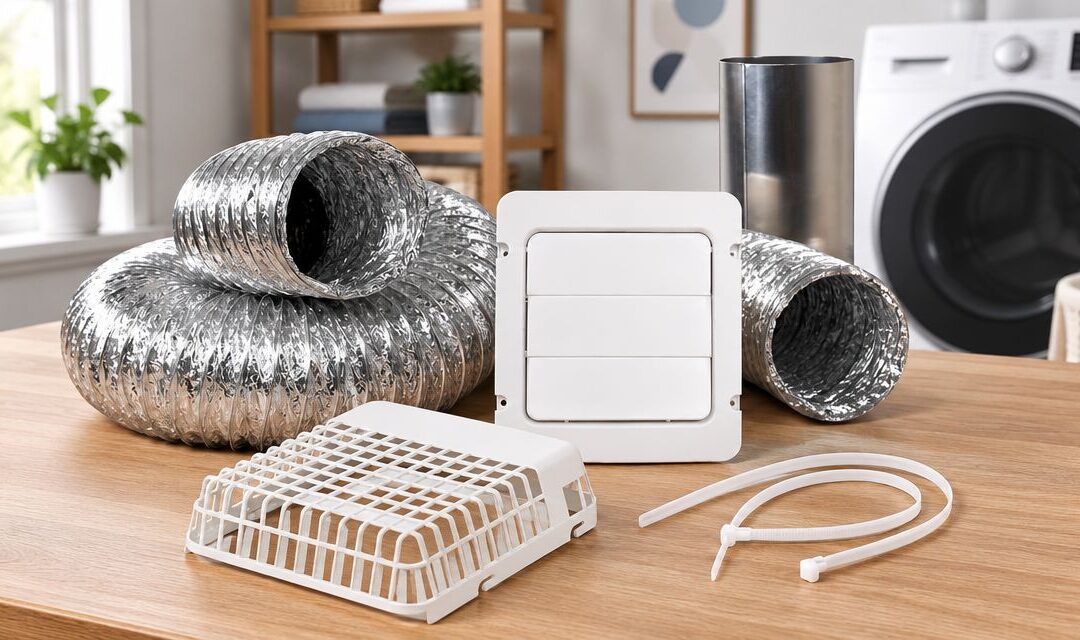
Seven dryer vent kits, one clear ranking for 2026: best overall is the ProVent Dryer Vent Kit for a standard exterior run, best for a full replacement job is the ProMax Dryer Vent Kit, best for laundry rooms with no exterior wall access is the Indoor Dryer Vent Kit, and vinyl duct kits should be skipped entirely.
- ProVent Dryer Vent Kit is the best overall dryer vent kit for a standard exterior run in 2026.
- ProMax Dryer Vent Kit suits full replacement jobs, not quick patches.
- Indoor Dryer Vent Kit fits laundry rooms with no exterior wall access.
- Rigid or semi-rigid metal duct meets most codes; vinyl duct kits do not.
- Foil flexible duct works only as a short connector, never the full run.
Why this matters
A dryer that runs hot, takes two cycles to dry a load, or pushes lint back into the room usually has a bad vent setup, not a bad dryer. The kit you buy decides how much airflow resistance that run has for as long as you own the machine.
Dundas Jafine builds dryer vent kits and duct for exactly this problem, and the seven options below cover almost every install a homeowner runs into in 2026: straight exterior runs, full replacements, indoor-only setups, and the raw duct material choices behind all of them.
What makes the best dryer vent kit
- Duct material that meets local code for the full run, not just part of it
- Fit for the actual path: straight shot versus tight turns behind the machine
- Hardware sized to the standard 4-inch dryer exhaust connection
- A real answer for indoor-only setups with no exterior wall
- Resistance to lint buildup over years of heat and moisture cycling
- Honest limits on where flexible material is allowed and where it isn't
Dryer vent kits at a glance
| # | Kit | Best for | Standout feature | Key limitation |
|---|---|---|---|---|
| 1 | ProVent Dryer Vent Kit | Standard exterior installs | Matched parts sized for a typical straight-through run | Not built for long or heavily angled runs |
| 2 | ProMax Dryer Vent Kit | Full replacement jobs | Step-up option for tearing out and redoing a whole run | Overkill for a simple, short swap |
| 3 | Indoor Dryer Vent Kit | Laundry rooms with no exterior access | Vents indoors when there's no path outside | Not a substitute for outdoor venting when it's available |
| 4 | Rigid metal duct kit | Code compliance and fire safety | Smooth walls resist lint buildup | Doesn't bend around tight corners |
| 5 | Semi-rigid aluminum duct kit | Tight turns behind the dryer | Holds shape but bends around obstacles | Slightly more ridges than smooth rigid pipe |
| 6 | Foil flexible transition duct | Short connector, not a full run | Flexes into cramped closet space | Not rated to replace the full exhaust run |
| 7 | Vinyl duct kit | Nothing — avoid it | None | Prohibited under most current building codes |
1. ProVent Dryer Vent Kit: best dryer vent kit for standard exterior installs
The ProVent Dryer Vent Kit is built for a dryer that vents straight out through an exterior wall. It bundles what a standard install needs into one purchase, so you're not hunting down duct, clamps and a vent hood separately.
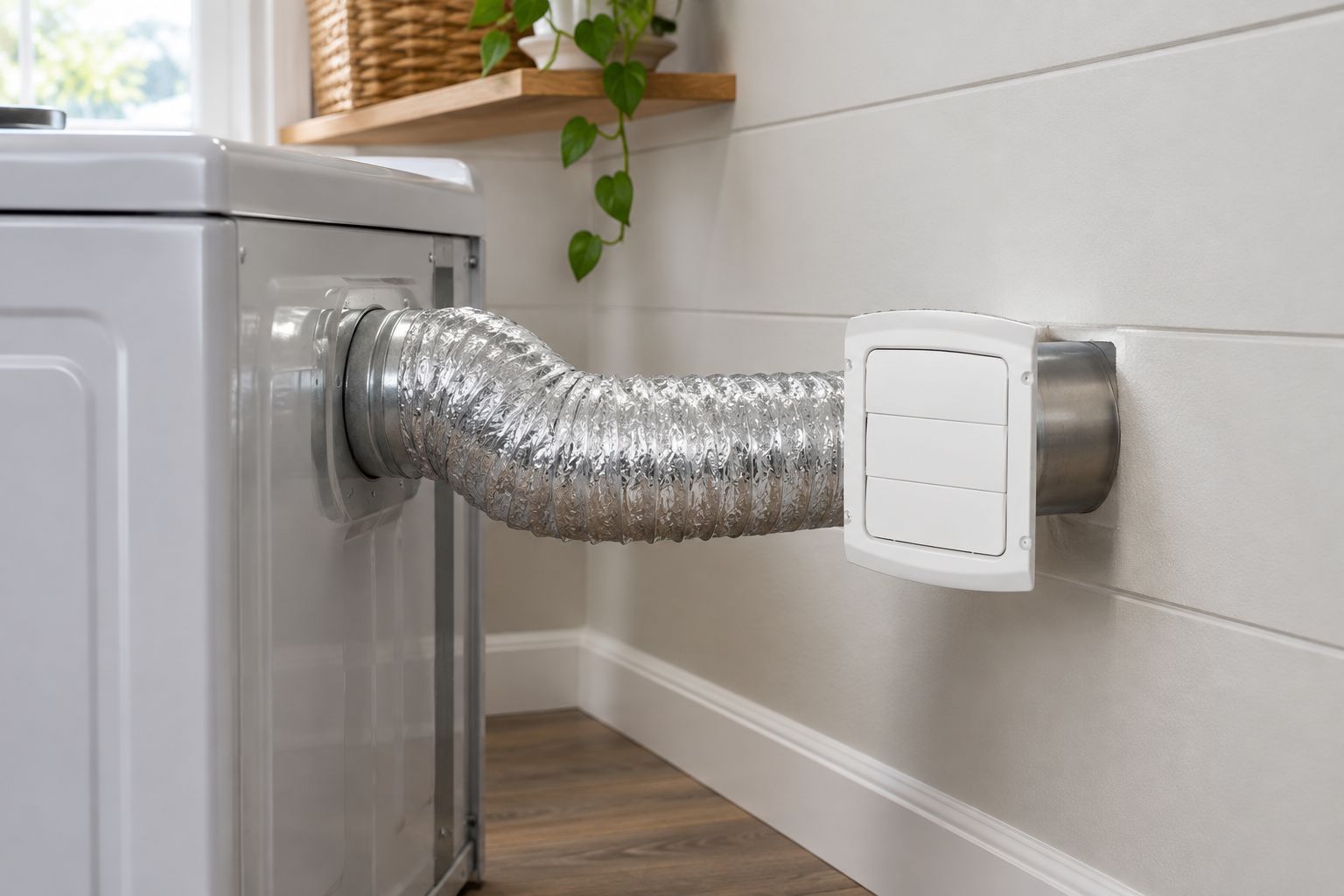
ProVent Dryer Vent Kit pros:
- Matched, code-appropriate parts in one purchase
- Sized for the standard 4-inch dryer exhaust connection
- Straightforward for a first-time DIY install
ProVent Dryer Vent Kit cons:
- Not sized for runs with several tight bends
- No indoor-venting option if there's no exterior wall
Best for: a straight or lightly angled run to an exterior wall. Verdict: Buy.
2. ProMax Dryer Vent Kit: best dryer vent kit for full replacement jobs
The ProMax Dryer Vent Kit sits above ProVent in the lineup, built for a complete vent-system replacement rather than a quick patch. It's the one to reach for when the old run is damaged enough that you're starting over.
ProMax Dryer Vent Kit pros:
- Designed for a full teardown-and-replace job, not a partial fix
- Same 4-inch connection standard as the rest of the lineup
- One purchase covers the whole job
ProMax Dryer Vent Kit cons:
- More kit than most homeowners need for a simple swap
- Still limited by the same code rules on bend count and material
Best for: full vent system replacements, not spot repairs. Verdict: Buy if replacing the whole run.
3. Indoor Dryer Vent Kit: best dryer vent kit for laundry rooms with no exterior access
The Indoor Dryer Vent Kit solves a different problem: what to do when the dryer physically can't vent outside. It's built for apartments, mobile homes and interior laundry closets with no path to an exterior wall.
Indoor Dryer Vent Kit pros:
- Only real option when outdoor venting isn't physically possible
- Fits a laundry closet with no exterior wall penetration
- Traps lint before it recirculates into the room
Indoor Dryer Vent Kit cons:
- Not a substitute for outdoor venting when outdoor venting is available
- Needs regular lint-filter cleaning to keep working
Best for: laundry setups with zero access to an exterior wall. Verdict: Buy only if outdoor venting genuinely isn't an option.


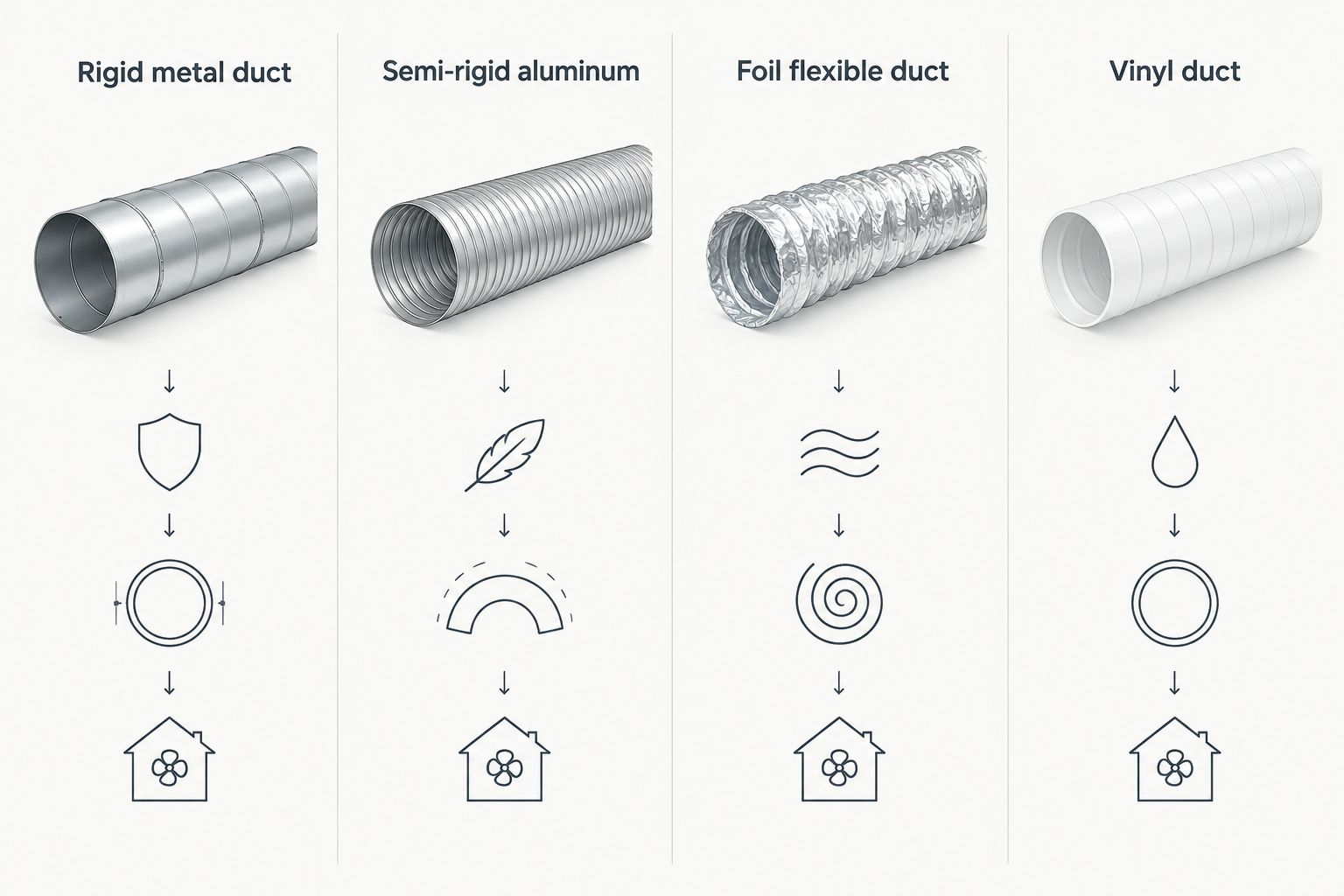
The rest of this list moves from packaged kits to the raw duct material itself, because the material decision matters as much as the kit you buy. Codes single out four categories for a dryer exhaust run, and only two of them are fully compliant for the entire length.
4. Rigid metal duct kit: best dryer vent kit for code compliance and fire safety
Rigid metal duct is the material most building codes point to first for a dryer exhaust run. Its smooth interior walls shed lint instead of catching it, which is the main reason inspectors favor it over flexible alternatives.
Rigid metal duct pros:
- Smooth walls resist lint buildup
- Meets the material requirement most inspectors check for
- Long service life with minimal maintenance
Rigid metal duct cons:
- Doesn't flex around obstacles
- Cutting and joining takes more work than a flexible kit
Best for: a straight, unobstructed run where code compliance matters most. Verdict: Buy for new construction or a full redo.
5. Semi-rigid aluminum duct kit: best dryer vent kit for tight turns behind the dryer
Semi-rigid aluminum duct is the compromise between rigid pipe and foil flex. It holds its shape but still bends around a corner where straight pipe won't fit, which is the usual case behind a dryer wedged into a tight closet.
Semi-rigid duct pros:
- Bends around obstacles without collapsing
- Still metal, so it meets most code requirements for the run
- Easier to install solo than rigid sections
Semi-rigid duct cons:
- Slightly more interior ridges than smooth rigid pipe
- Can kink if bent too sharply
Best for: a run with one or two tight turns behind the machine. Verdict: Buy when rigid pipe won't fit the space.
6. Foil flexible transition duct: best dryer vent kit for a short connector, not a full run
Foil flexible duct is meant for the last short stretch between the back of the dryer and the wall or floor vent, not the whole run outside. It flexes easily into a cramped closet where nothing else fits.
Foil flex duct pros:
- Flexes into spaces rigid and semi-rigid duct can't reach
- Cheap and easy to swap when it gets crushed
Foil flex duct cons:
- Not rated to replace the full exhaust run under most codes
- Crushes easily if the dryer gets pushed back against the wall
Best for: the short connector segment only, paired with rigid or semi-rigid duct for the rest of the run. Verdict: Buy as a connector piece, never as the whole system.
7. Vinyl duct kit: best dryer vent kit for nothing — skip it
Vinyl duct kits still show up on store shelves, but this is the one category on the list with a simple answer: don't. Most current building codes, including the International Residential Code, prohibit plastic or vinyl duct for dryer exhaust because it doesn't hold up to the heat and can feed a fire instead of stopping one.
Vinyl duct pros:
- None that outweigh the fire risk
Vinyl duct cons:
- Prohibited under most current codes
- Can melt or ignite under dryer exhaust heat
- Traps more lint than smooth metal duct
Best for: nothing — replace it if you find it in your home. Verdict: Skip.
How this list was ranked
Each kit and duct type was measured against the six criteria above: code-legal material, fit for the actual path, hardware sized to a 4-inch connection, an indoor option, lint resistance, and honest limits on flexible duct. That's why the list splits into packaged kits first and raw material categories second — they answer different questions.
Which dryer vent kit should you choose in 2026?
For a standard install to an exterior wall, the ProVent Dryer Vent Kit is the default pick. Replacing an entire failing run calls for the ProMax Dryer Vent Kit, and a laundry closet with no outside wall needs the Indoor Dryer Vent Kit. Anywhere you find vinyl duct already installed, replace it before it becomes a fire risk instead of a vent.
FAQ
What is the best dryer vent kit for 2026?
The ProVent Dryer Vent Kit is the best overall dryer vent kit for 2026 for a standard exterior run. Full replacements suit the ProMax Dryer Vent Kit, and closets with no exterior wall need the Indoor Dryer Vent Kit.
Is vinyl dryer duct safe to use?
No, vinyl dryer duct is prohibited under most current building codes because it can’t handle dryer exhaust heat safely. Replace any vinyl duct you find with rigid or semi-rigid metal duct.
Can I use flexible foil duct for the entire dryer vent run?
No, foil flexible duct is meant for a short connector segment only, not the full exhaust run. Pair it with rigid or semi-rigid metal duct for the rest of the path.
What’s the difference between a dryer vent kit and buying duct separately?
A dryer vent kit bundles matched, correctly sized parts for one install so nothing is mismatched. Buying duct, clamps and a vent hood separately risks size or material mismatches.
Do I need an indoor dryer vent kit if I don’t have an exterior wall?
Yes, an indoor dryer vent kit is the practical option when there’s genuinely no path to vent outside. It’s common in apartments, mobile homes and interior laundry closets.
How much does a dryer vent kit cost?
Cost varies by material and retailer, since rigid, semi-rigid and packaged kits are priced differently. Check the retailer’s current price for exact figures.
How many bends should a dryer vent duct have?
Fewer bends is always better, since every elbow adds airflow resistance the dryer has to push against. A straight run with no elbows performs best.
Is rigid or semi-rigid duct better for a dryer vent kit?
Rigid duct wins on a straight, unobstructed run because its smooth walls resist lint buildup best. Semi-rigid aluminum wins when the path has tight turns rigid pipe can’t make.
One last thing
Duct length gets blamed for weak airflow more than it deserves. Every 90-degree elbow in a run adds more resistance than a few extra feet of straight duct, which is why a shorter run with three tight turns can dry slower than a longer, straighter one — count the bends before you count the feet.